
Selecting the right flooring partner often comes down to a balance between material durability, certification standards, and the specific demands of the facility. For high-traffic areas and professional sports environments, the margin for error is slim, as the surface directly impacts user safety and long-term maintenance costs.
The shift toward specialized synthetic surfaces has transformed how architects and facility managers evaluate vinyl flooring suppliers. Rather than looking for a generic product, the focus has moved toward performance-engineered solutions that can withstand extreme mechanical stress while maintaining strict safety approvals.
This report examines the critical evaluation metrics for sourcing professional-grade vinyl and modular flooring, highlighting the intersection of international certifications and material innovation in the current market.


Historically, synthetic flooring was viewed primarily as a cost-effective alternative to hardwood. However, the development of multi-layered PVC and modified polypropylene (P.P.) has shifted the narrative toward functional superiority, particularly in shock absorption and joint protection.
The industry has transitioned from simple homogenous sheets to complex composite structures. Modern systems now integrate specific layers for moisture barriers, acoustic dampening, and surface friction control, allowing a single product to serve multiple athletic or commercial purposes.
Professional vinyl flooring is defined by its wear layer and the core composition. The wear layer acts as the primary defense against abrasion, while the core provides the necessary stability and flexibility. In sports-specific vinyl, a foam backing is often incorporated to reduce the impact on athletes' joints, a critical factor for long-term injury prevention.
Innovation in connection methods has also played a pivotal role. While traditional glue-down methods remain common, the introduction of elastic self-expansion buckle connections has reduced installation time and solved the recurring issue of thermal expansion and contraction, which often leads to buckling in large-scale installations.
Furthermore, the integration of UV-stable treatments ensures that color fastness is maintained even in environments with high sunlight exposure. This technical layering ensures that the aesthetic appeal of the floor does not compromise its mechanical integrity over a multi-year lifecycle.
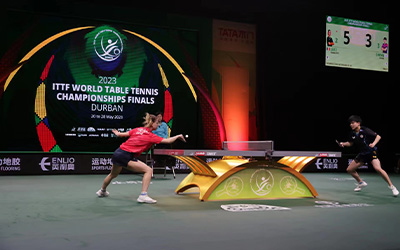
When vetting vinyl flooring suppliers, certifications serve as the primary proxy for quality and safety. For sports surfaces, approval from bodies like FIBA, BWF, and ITTF indicates that the floor meets the precise friction and bounce requirements of professional competition.
Certifications such as ISO9001, ISO14001, and CE are not merely bureaucratic checkboxes; they represent a verified commitment to consistent manufacturing tolerances and environmental safety standards that protect both the installer and the end-user.
Beyond sports-specific bodies, SGS and OHSAS18001 certifications ensure that the materials are non-toxic and that the production process adheres to strict occupational health and safety guidelines. This is particularly vital for installations in kindergartens and public gyms where air quality and chemical emissions are heavily scrutinized.
Evaluating flooring requires looking at qualitative metrics translated into a relative index. Factors such as shock absorption, slip resistance, and ease of maintenance vary significantly between standard commercial vinyl and professional sports vinyl.
The following data illustrates a relative performance model comparing different flooring categories across five critical operational dimensions, highlighting why specialized sports flooring is prioritized for athletic venues.
Different environments demand distinct material properties. For instance, a professional basketball court requires a precise balance of ball rebound and athlete traction, often achieved through specialized PVC sports flooring. Conversely, a kindergarten setting prioritizes non-toxicity and extreme cushioning to prevent injury during falls.
In outdoor settings, the requirements shift toward weather resistance and drainage. Modular court tiles, such as those using modified P.P. raw materials with a hollow structure, are often preferred here. These systems provide the necessary stability and UV resistance while allowing water to permeate, preventing the pooling that can occur with solid vinyl surfaces.
The industry is moving rapidly toward a circular economy. The development of 100% recyclable modified P.P. raw materials represents a significant step forward, reducing the environmental footprint of large-scale sports installations without sacrificing performance.
Sustainability is no longer just about the raw materials but also about the lifecycle of the product. Low-maintenance surfaces that require fewer chemical cleaners and have longer replacement cycles are becoming the preferred choice for environmentally conscious facility managers.
We are also seeing a trend toward "intelligent flooring"—surfaces integrated with sensors to track athlete movement or monitor floor wear in real-time. While still in early adoption, this intersection of materials science and data analytics will likely redefine how vinyl flooring suppliers approach product design.
Procuring flooring for a professional facility requires a structured evaluation framework. Buyers should move beyond price-per-square-meter and instead calculate the total cost of ownership, which includes installation time, maintenance frequency, and expected lifespan.
A critical part of the selection process is verifying the supplier's track record with international sports federations. A supplier that provides flooring for FIBA 3x3 World Events or the Olympic Games demonstrates a capacity to meet the most stringent quality controls in the world.
The following table provides a relative suitability guide for different flooring types based on common project requirements, helping procurement officers align material choice with facility goals.
| Material Type | Impact Absorption | Weather Resistance | Certification Need | Primary Use Case |
|---|---|---|---|---|
| Professional PVC | High | Indoor Only | FIBA/BWF | Indoor Arenas |
| Modular P.P. Tiles | Medium | High | SGS/CE | Outdoor Courts |
| Hardwood-Hybrid | Medium | Low | Industry Std | Multi-purpose Gyms |
| Commercial Vinyl | Low | Medium | ISO/SGS | Office/Hotel |
| Customized Foam | Extreme | Indoor/Outdoor | Non-Toxic | Kindergartens |
| Acrylic Track | High | High | World Athletics | Running Tracks |
Verify their certifications from governing bodies such as FIBA, BWF, or ITTF. A qualified supplier should provide valid certification documents and a portfolio of previous installations in sanctioned sporting events. Additionally, look for ISO9001 and ISO14001 certifications, which ensure the manufacturer maintains consistent quality control and environmental management systems across their production lines.
Glue-down vinyl is permanently bonded to the subfloor, offering maximum stability but requiring professional adhesives and longer installation times. Buckle-connection systems, such as the elastic self-expansion method, allow tiles to click together. This not only speeds up installation but also provides a floating floor that can naturally expand and contract with temperature changes, reducing the risk of gaps or buckling over time.
Yes, when modified correctly. Modern recyclable P.P. (polypropylene) flooring, often used in modular tiles, is specifically engineered for durability and UV resistance. While PVC is generally preferred for indoor high-grip sports due to its surface texture, modified P.P. is often superior for outdoor applications because of its structural resilience and ability to be recycled at the end of its life cycle.
Shock absorption reduces the peak impact force transmitted to the athlete's joints during jumps and rapid movements. A floor with optimized shock absorption minimizes fatigue and reduces the risk of stress fractures and joint inflammation. Professional sports flooring is engineered to balance this absorption with "energy return," ensuring the athlete doesn't lose too much power during explosive movements.
Most modern high-performance vinyls are designed for low maintenance. Routine cleaning typically involves dry dusting and occasional damp mopping with pH-neutral cleaners. The key is avoiding abrasive chemicals or tools that can damage the wear layer. For modular systems, individual tiles can often be replaced if damaged, which is significantly more cost-effective than replacing an entire sheet of vinyl.
While multi-purpose flooring exists, the ideal friction and bounce requirements for basketball and badminton differ slightly. However, many professional vinyl suppliers offer "multi-sport" versions that meet the minimum standards for both. When selecting such a product, ensure it is approved by both FIBA and BWF to guarantee that it performs safely and effectively for both sports.
The selection of a flooring partner is a strategic decision that impacts the safety of users and the operational budget of a facility for decades. By shifting focus from initial cost to technical certifications and material science, facility managers can ensure they are installing a surface that meets international standards.
Whether opting for the sustainable flexibility of modular P.P. systems or the high-performance grip of professional PVC, the priority must remain on verified performance data and global certification. In a market saturated with options, relying on suppliers with proven experience in world-class sporting events remains the most reliable path to quality.