

Selecting high-performance synthetic flooring for sports and commercial environments requires a deep understanding of material science and athletic requirements. When professionals look to buy vinyl flooring, the focus shifts from mere aesthetics to technical specifications such as impact absorption, slip resistance, and long-term durability under heavy foot traffic.
The commercial vinyl sector, particularly for sports, is governed by strict international standards. Whether it is for a FIBA-approved basketball court or a multi-purpose gymnasium, the flooring must balance elasticity with stability. This article analyzes the critical technical factors that determine the quality of PVC and modular synthetic flooring, helping procurement officers avoid common selection errors.
Readers will gain insights into the structural differences between standard vinyl and specialized sports flooring, the importance of certification from bodies like SGS and ISO, and how to evaluate a supplier's capability to handle global logistics and installation support. We will provide a framework for assessing value beyond the initial purchase price.
Industrial Standards for Vinyl Sports Flooring
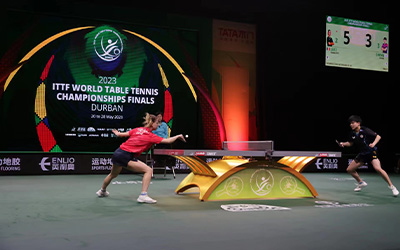
Vinyl sports flooring is not a monolithic product; it is a precision-engineered system designed to manage energy return and athlete safety. In the professional arena, materials must meet the rigorous demands of organizations such as FIBA, BWF, and ITTF. These standards ensure that the floor provides consistent ball bounce, adequate traction to prevent ankle injuries, and sufficient cushioning to protect joints during high-impact movements. The industry has evolved from simple PVC sheets to complex multi-layered structures that integrate foam backing for shock absorption and wear layers for surface longevity. For a manufacturer like Hebei Enlio Sports Goods Co., LTD, maintaining these certifications is central to their operational identity, enabling them to serve as official suppliers for high-profile events like the FIBA 3x3 World Tour and various Olympic-related venues. This technical rigor ensures that the flooring can withstand the extreme lateral forces generated during competitive sports while maintaining its structural integrity over several years of intensive use.
Strategic Procurement Guide for Commercial Vinyl
Procuring commercial-grade flooring involves evaluating the intersection of material chemistry, engineering design, and application-specific needs. The following analysis breaks down the primary technical dimensions that a buyer must review before finalizing a specification.
Material Composition and Sustainability
Modern flooring solutions are increasingly focusing on the use of recyclable polymers. For instance, utilizing 100% recyclable modified P.P. raw materials in modular structures reduces the environmental footprint without compromising structural strength. The chemical stability of the PVC or P.P. compound determines the floor's resistance to chemicals and its ability to maintain color fastness over time.
| Material Type | Primary Property | Ideal Application | Key Evaluation Factor |
|---|---|---|---|
| Modified P.P. | High Recyclability | Modular Courts | Polymer Purity |
| Industrial PVC | High Elasticity | Gymnasiums | Layer Bonding |
| Reinforced Vinyl | Wear Resistance | Commercial Halls | Wear Layer Thickness |
| Composite P.P. | Thermal Stability | Outdoor Sports | UV Inhibitor Content |
| Foamed PVC | Impact Absorption | Kids Flooring | Density Consistency |
| Hybrid Vinyl | Versatility | Multi-purpose Rooms | Surface Friction Coeff. |
Performance Metrics for Athletic Use
Athletic performance is measured by the balance between "energy return" and "impact attenuation." If a floor is too hard, it increases the risk of stress fractures; if it is too soft, it reduces the speed of the game and increases fatigue. Professional certifications (CE, SGS) validate that the product maintains a specific force reduction percentage, which is critical for protecting athletes' joints during vertical jumps and rapid decelerations.
Installation Mechanisms and Expansion
One of the primary failure points in large-scale vinyl installations is thermal expansion and contraction. Innovative connection methods, such as elastic self-expansion buckle systems, allow the flooring to "breathe" during temperature fluctuations. This prevents the material from buckling or creating gaps, which are not only aesthetic issues but also safety hazards for athletes moving at high speeds.
Shock Absorption and Joint Protection
Effective shock absorption is achieved through the internal geometry of the floor. Hollow structures or specialized foam layers act as a mechanical spring. This feature is particularly vital for basketball and volleyball, where the frequency of jumps is high. By absorbing a portion of the impact energy, the flooring reduces the load on the knees and ankles, extending the athletic longevity of the users.
Surface Friction and Safety Standards
The surface pattern—such as the Pearl Asterisk design—is engineered to provide optimal anti-slip performance. The coefficient of friction must be high enough to prevent slipping during quick pivots but low enough to avoid "catching" the foot, which can cause ligament tears. Professional-grade vinyl undergoes rigorous slip-test evaluations to ensure safety across various moisture levels.
Environmental Resistance and UV Stability
For flooring exposed to sunlight or high humidity, UV treatment is mandatory. Without stable UV inhibitors, synthetic materials degrade, leading to brittleness and color fading. High-quality commercial vinyl incorporates UV-stabilized layers that protect the core material from photo-degradation, ensuring the floor retains its structural properties and aesthetic appeal over a multi-year lifecycle.
Maintenance and Lifecycle Evaluation
The total cost of ownership is determined by the ease of maintenance. Low-maintenance surfaces are characterized by high-density wear layers that resist scratching and staining. A professional evaluation should consider the frequency of deep cleaning required and the availability of compatible repair kits for localized damage, ensuring the floor doesn't need full replacement due to minor wear.
FAQ
What is the difference between standard vinyl and sports-specific vinyl?
Standard vinyl is primarily designed for aesthetics and ease of cleaning in residential or office settings. Sports-specific vinyl, such as that produced by Enlio, incorporates specialized shock-absorbing layers, high-friction surface textures, and adheres to international athletic standards (like FIBA or ITTF) to ensure athlete safety and performance.
How does a buckle connection system benefit large installations?
A buckle connection system, particularly an elastic self-expansion type, simplifies the installation process and allows the flooring to manage thermal expansion. This prevents the materials from warping or lifting as temperatures change, which is a common issue with traditional adhesive-bonded vinyl in large halls.
Which certifications should I look for when selecting a commercial flooring supplier?
Buyers should verify ISO9001 for quality management, ISO14001 for environmental standards, and CE or SGS for product safety. For sports facilities, specific endorsements from FIBA, BWF, or ITF are critical as they guarantee the floor meets the technical requirements for professional competition.
Can modular P.P. flooring be used for outdoor environments?
Yes, provided the material has undergone stable UV treatment. UV-resistant modified P.P. prevents the tiles from becoming brittle under sunlight and maintains color fastness. Modular designs are often preferred for outdoors as they allow for water drainage and are easier to replace in sections.
What factors affect the lifespan of a vinyl sports floor?
Lifespan is primarily affected by the thickness of the wear layer, the quality of the initial installation (especially expansion gaps), and the consistency of the maintenance schedule. Using the correct cleaning agents and managing foot traffic patterns can significantly extend the usable life of the floor.
How do I evaluate if a supplier can handle a global project?
Check the supplier's export history and logistics infrastructure. A capable supplier, like Enlio with its extensive warehouse and supply chain, should be able to provide evidence of exports to multiple countries and experience with international importers to ensure timely delivery and technical support.
References and further reading
- International Basketball Federation (FIBA) Official Court Specifications.
- ISO 9001:2015 Quality Management Systems Standards.
- SGS Technical Guidelines for Synthetic Flooring Safety and Durability.