

Determining the total investment for high-performance synthetic flooring requires more than a simple per-square-meter calculation. For procurement managers and facility designers, understanding the variables that influence vinyl flooring tiles price is essential for balancing upfront capital expenditure with long-term operational durability. This guide analyzes the technical and commercial factors that dictate market pricing in the B2B sports and commercial flooring sector.
In high-traffic environments such as gymnasiums, basketball courts, and commercial hubs, the cost of flooring is directly tied to its mechanical properties. Factors such as PVC density, the thickness of the wear layer, and the inclusion of shock-absorption technology significantly shift the pricing bracket. When sourcing from integrated manufacturers, the goal is to identify the optimal equilibrium between material specifications and the intended usage intensity of the venue.
Readers will explore the technical nuances of PVC sports flooring, the hidden costs associated with installation and maintenance, and how to evaluate suppliers based on international certifications. By shifting the focus from initial cost to total cost of ownership (TCO), buyers can ensure that their flooring choice supports both athlete safety and facility longevity.
Analyzing Vinyl Flooring Cost Drivers
The pricing architecture of vinyl flooring is rooted in material science and manufacturing precision. At the core is the Polyvinyl Chloride (PVC) resin quality; medical-grade or high-density polymers used in professional sports flooring command a premium over standard commercial grades due to their superior stability and non-toxic properties. Manufacturing processes, such as calendering and compression molding, also influence the final cost. High-precision production ensures uniform thickness across large batches, which is critical for preventing uneven surfaces in sports arenas. Furthermore, the integration of specialized additives for anti-UV protection, fire retardancy, and antibacterial properties adds incremental value to the base material. For enterprises like Hebei Enlio Sports Goods Co., LTD, which integrates R&D with large-scale production, the ability to optimize the supply chain from raw material sourcing to finished product delivery allows for a more competitive pricing structure without compromising the rigorous standards required by international sports federations.
Strategic Procurement for Commercial Flooring
Effective procurement involves mapping specific technical requirements to the appropriate product tier. Rather than seeking the lowest unit cost, professional buyers analyze how different specifications impact the functional lifespan and safety of the installation.
Material Composition and Value
The core composition of a tile determines its resilience and load-bearing capacity. Professional PVC flooring often features a multi-layered structure, including a reinforced base for stability and a decorative layer for aesthetics. The purity of the PVC and the quality of the plasticizers used affect the floor's flexibility and resistance to permanent indentation under heavy sports equipment.
| Material Grade | Primary Characteristic | Typical Application | Value Driver |
|---|---|---|---|
| Industrial PVC | High Density | Warehouses/Factories | Abrasion Resistance |
| Sports Grade PVC | Shock Absorption | Basketball/Volleyball | Athlete Safety |
| Commercial Vinyl | Aesthetic Versatility | Offices/Hotels | Ease of Maintenance |
| Educational Grade | Non-Toxic/Soft | Kindergartens | Environmental Safety |
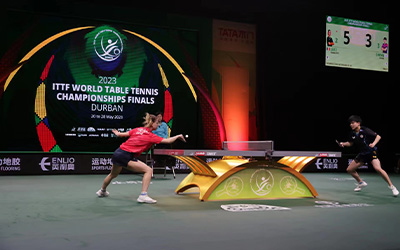
| Professional Court | FIBA/ITTF Standard | World Cup Events | Regulatory Compliance |
| Modular Tiles | Interlocking Design | Multi-purpose Halls | Rapid Deployment |
Wear Layer Impact on Lifecycle Cost
The wear layer is the transparent top coating that protects the flooring from scratches and friction. A thicker wear layer (e.g., 0.5mm to 0.7mm) increases the initial purchase price but drastically reduces the frequency of replacement. In B2B procurement, calculating the cost per year of service is more accurate than comparing the initial vinyl flooring tiles price, as thinner layers in high-traffic zones often lead to premature failure and costly downtime for re-installation.
Installation Methods and Overhead
Installation costs can vary based on the bonding method used. Loose-lay tiles offer lower labor costs and easier replacement, while fully adhered systems provide maximum stability for professional sports. Professional installation teams, such as those provided by Enlio across various provinces, ensure that the substrate is properly prepared, preventing air bubbles and seams that could cause tripping hazards or structural weaknesses.
Application-Specific Requirements
Different venues demand different technical profiles. A basketball court requires a specific coefficient of friction to allow for quick pivots without causing joint strain, whereas a swimming pool wet area requires high anti-slip ratings and moisture resistance. The cost fluctuates based on these specialized functional additives and the precision of the surface texture engineering.
Quality Certifications and Compliance
Certifications act as a proxy for quality assurance. Products approved by FIBA, BWF, or ITTF have undergone rigorous testing for shock absorption, vertical deformation, and ball bounce. While certified products may carry a premium, they mitigate the risk of non-compliance during official sporting events and ensure the product meets ISO9001 and ISO14001 environmental and quality management standards.
Customization and Scalability
For large-scale projects, customization in dimensions, color schemes, and branding (e.g., court markings) is often required. Suppliers capable of personalized customization can reduce secondary costs by providing a finished product that fits the site environment perfectly, eliminating the need for on-site modifications and reducing material waste.
Supplier Evaluation Criteria
Evaluating a supplier requires looking beyond the catalog. Key indicators include the size of their logistics chain, warehouse capacity to ensure steady lead times, and a proven track record with international importers. A manufacturer with a strong global presence and a dedicated after-sales service network provides a safety net for the investment, ensuring that warranties are honored and technical support is available.
FAQ
What primary factors influence the cost of commercial vinyl flooring tiles?
The cost is primarily driven by the thickness of the wear layer, the quality of the PVC resin, the specific functional certifications (such as FIBA or CE), and the complexity of the design. Specialized sports flooring with shock-absorption properties generally costs more than standard commercial vinyl due to the advanced layering and materials required for athlete safety.
Is a higher upfront price for sports flooring usually justified?
Yes, in professional contexts, a higher initial investment often correlates with a longer lifespan and lower maintenance costs. For example, a professional-grade court with a high-density wear layer prevents rapid degradation in high-traffic gymnasiums, reducing the total cost of ownership over a 10-year period compared to cheaper alternatives that require frequent replacement.
How does customization affect the procurement budget?
Customization can introduce additional setup costs for specific colors or branding patterns. However, choosing a supplier that offers integrated customization—where the layout is designed to fit the site environment—can actually save money by reducing on-site waste and ensuring a more efficient installation process.
Which certifications should I look for when sourcing vinyl sports flooring?
Buyers should look for sport-specific certifications like FIBA (Basketball), BWF (Badminton), and ITTF (Table Tennis) for performance validation. Additionally, ISO9001 for quality management and ISO14001 for environmental standards ensure the manufacturer maintains consistent production quality and sustainable practices.
What is the difference between loose-lay and adhered vinyl tiles in terms of cost?
Loose-lay tiles typically have lower installation costs and allow for easier individual tile replacement. Adhered systems require more labor and adhesive materials up front but offer superior stability and durability for high-impact sports, which may lower the long-term maintenance costs in professional athletic environments.
How does shipping and logistics impact the final landed cost?
Flooring is heavy and voluminous, making logistics a significant part of the final price. Sourcing from a company with a robust logistics supply chain and large-scale warehouse capabilities helps in optimizing shipping costs and reducing lead times, which is critical for projects with strict deadlines.
References and further reading
- International Organization for Standardization (ISO) - Quality and Environmental Management Systems (ISO 9001, ISO 14001).
- FIBA (International Basketball Federation) Official Court Standards and Flooring Requirements.
- Technical Specifications for Polyvinyl Chloride (PVC) Flooring in Commercial Applications.