
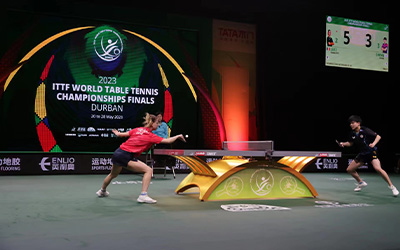

When planning a sports facility, the investment in flooring is one of the most critical decisions affecting long-term operational costs and player safety. Understanding the price of badminton court mat requires a deep dive into the relationship between material quality, performance specifications, and the expected lifespan of the surface. Rather than looking at a simple unit cost, facility managers must evaluate the total value proposition of the flooring system.
The market offers a variety of options, from basic PVC rolls to advanced prefabricated multi-layer systems. The disparity in pricing usually stems from the technical capabilities of the mat, such as its ability to return energy to the player and absorb impact to prevent joint injuries. In professional environments, the requirement for BWF (Badminton World Federation) or ITTF compliance often dictates the technical baseline and, consequently, the financial investment required for the project.
This guide provides a comprehensive analysis of the factors that influence the cost of professional court mats. We will examine the technical specifications of high-performance series, such as the Gem series, and explain how specific features like embossed surfaces and shock absorption ratings translate into commercial value. By the end of this article, procurement officers will have a clear framework for evaluating supplier quotes and selecting a flooring solution that balances budget with athletic performance.
Understanding the Value Drivers of Court Flooring
The cost of professional badminton flooring is not determined by a single factor but by a combination of raw material purity, manufacturing complexity, and performance certification. At the core of a high-quality mat is the multi-layer PVC construction. Unlike cheap alternatives, professional-grade flooring utilizes a stratified approach where each layer serves a specific purpose: a wear layer for durability, a printed layer for aesthetics, a glass fiber layer for dimensional stability, and a foam layer for shock absorption. This structural complexity ensures that the mat does not shrink or expand significantly under varying temperature conditions, which is vital for maintaining official court dimensions.
Furthermore, the integration of specialized surface treatments, such as the Gem stone embossed design, adds value by improving friction and ball control. These textures are engineered to provide a consistent grip for players moving at high speeds, reducing the risk of slips. From a commercial perspective, the inclusion of international certifications like EN14904 or approvals from bodies such as FIBA and BWF signifies that the product has undergone rigorous testing for shock absorption and vertical deformation. These certifications act as a quality guarantee, reducing the risk of premature replacement and lowering the long-term cost of ownership for the facility operator.
Analyzing the Investment in Badminton Mats
To accurately assess the financial requirements of a badminton flooring project, one must look beyond the initial purchase price. The total investment is a sum of material costs, installation labor, and the projected maintenance overhead over the product's lifecycle. Below is a detailed breakdown of the seven primary dimensions that influence the final valuation of the flooring system.
Material Composition and Cost
The primary driver of cost is the grade of PVC and the sophistication of the layering process. High-performance mats, like those in the Gem series, use a multi-layer prefabricated structure that balances flexibility with hardness. The quality of the wear layer determines how long the mat will resist abrasions from footwear, directly impacting how often the floor needs to be replaced.
| Layer Type | Primary Function | Impact on Value | Evaluation Criteria |
|---|---|---|---|
| Wear Layer | Surface Protection | Increases Lifespan | Thickness & Abrasion Resistance |
| Glass Fiber | Dimensional Stability | Prevents Warping | Tensile Strength |
| Foam Layer | Impact Absorption | Player Safety | Shock Absorption Rate (%) |
| Surface Texture | Traction/Grip | Performance Gain | Coefficient of Friction |
| PVC Base | Structural Integrity | Durability | Material Purity |
| Reinforcement | Tear Resistance | Edge Longevity | Multi-layer Bonding Quality |
Shock Absorption and Athlete Safety
Shock absorption is a critical technical parameter. Flooring that meets P1 grade standards provides superior protection for athletes' joints. The energy return value of the foam layer allows players to jump and move efficiently without losing too much kinetic energy, while simultaneously absorbing the impact of landing. Investing in higher shock absorption typically increases the initial price but significantly reduces the risk of athlete injury, which is a primary concern for professional academies and schools.
Surface Texture and Ball Control
The "Gem stone" classic surface design is an example of how technical engineering adds value. An embossed surface provides a specific micro-texture that optimizes the interaction between the shoe sole and the floor. This anti-slip property is essential for the rapid changes in direction characteristic of badminton. Surfaces that are too smooth or too rough can either cause slips or create excessive drag, both of which hinder performance and safety.
Installation Complexity
Installation costs vary based on the product format. Roll-based PVC flooring requires precision welding and adhesive application to ensure seamless joints. The cost of professional installation is an essential part of the budget, as improper fitting can lead to bubbles, gaps, or peeling edges, which not only look unprofessional but can become tripping hazards for players. A well-installed mat ensures the full performance of the material is realized.
Maintenance and Lifecycle Costs
A higher initial investment in a high-quality PVC mat often results in lower maintenance costs. Materials designed for easy cleaning and minimal maintenance reduce the need for expensive specialized chemicals or frequent deep-scrubbing. When calculating the total cost, the longevity of the mat—how many years it remains in peak condition before requiring replacement—is the most important metric for determining the actual value per year of use.
Certification and Compliance Standards
Compliance with standards like EN14904, ISO9001, and certifications from BWF or FIBA adds a layer of guaranteed quality. These certifications prove that the manufacturer has invested in advanced testing equipment to verify the product's performance parameters. For commercial venues hosting sanctioned tournaments, these certifications are not optional; they are a requirement for the facility to be officially recognized.
Procurement Volume Considerations
In B2B procurement, the scale of the project significantly affects the unit cost. Suppliers with large-scale logistics chains and extensive warehousing capabilities can offer more competitive pricing for bulk orders. Furthermore, the ability of a supplier to provide comprehensive after-sales service and installation support can offset the costs associated with managing multiple sub-contractors during the facility build-out.
FAQ
What factors most influence the price of professional badminton mats?
The most influential factors include the material grade (PVC purity), the number of structural layers, the shock absorption rating (e.g., P1 grade), and international certifications (BWF, EN14904). Additionally, surface treatments like embossed textures and the overall volume of the order will affect the final cost. High-performance multi-layer PVC offers more value over time compared to single-layer options due to its durability and athlete protection.
Is a more expensive mat always better for player safety?
Generally, yes, because higher-priced professional mats invest more in the foam layer for shock absorption and energy return. This reduces the impact on players' ankles and knees. However, it is important to check the specific shock absorption percentages and certifications rather than relying solely on the price tag. Ensure the mat meets the standard for the level of competition (recreational vs. professional) taking place in your facility.
How does the Gem series differ from standard PVC flooring?
The Gem series is a prefabricated multi-layer system specifically designed for versatile sports use. Its key differentiator is the Gem stone embossed surface, which enhances ball control and provides superior anti-slip properties. It also strictly complies with EN14904 standards for shock absorption, making it more suitable for competitive environments than standard, non-certified PVC flooring.
What should I look for when evaluating a sports flooring supplier?
Evaluate the supplier's industry experience, their certifications (such as ISO9001 or SGS), and their track record with major sporting events. A supplier like Hebei Enlio, which has experience with FIBA and ITTF events and exports to over 80 countries, provides a level of reliability in quality and logistics. Also, check if they offer an integrated service package including research, production, installation, and after-sales support.
How often does professional badminton PVC flooring need replacement?
The replacement cycle depends on the usage intensity and the quality of the wear layer. High-quality multi-layer PVC mats can last many years if maintained properly. Regular cleaning and the use of appropriate footwear are essential. If the surface loses its grip or the shock absorption foam collapses, the floor should be replaced to prevent athlete injury and maintain game quality.
Does the color of the mat affect its performance or cost?
Standard colors usually do not affect the price or the technical performance of the mat. However, custom colors or complex multi-color layouts for branded courts may incur additional costs during the printing process. The performance remains the same as long as the multi-layer structure and surface treatment are consistent across the product line.
References and further reading
- EN 14904: Sports surfaces - Surface requirements for indoor sports areas.
- BWF (Badminton World Federation) Court Specifications and Equipment Standards.
- ISO 9001 Quality Management Systems for Sports Flooring Manufacturing.